
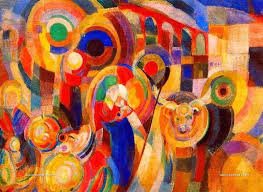
In the early 20th century, amid the explosion of European avant-garde movements, a unique artistic vision emerged that blended science, color, and musicality: Orphism. Also known as chromatic Orphism, this movement was pioneered by the couple Robert and Sonia Delaunay, who aimed to create a visual language grounded in the harmony of light, rhythm, and pure color.
While other modern art movements leaned toward cold abstraction or social critique, Orphism proposed a sensorial, almost synesthetic experience. Its artists believed that color held emotional and spiritual power, capable of transforming how we perceive the world. Even today, its shapes and vibrant palettes influence not only contemporary painters but also graphic designers, fashion brands, and companies seeking a lively visual identity.
The Birth of Orphism and Its Musical Roots
The term “Orphism” was coined by poet Guillaume Apollinaire, referencing the mythological musician Orpheus. So, the connection was intentional: the movement sought to break free from the analytical Cubism’s rigidity and embrace painting that, like music, was rhythmic, abstract, and emotionally evocative. Its goal wasn’t to depict the outer world but to create internal sensations through circular forms, dynamic compositions, and contrasting colors.
According to the study Orphism: Color and Rhythm in Early Modern Art, from the University of Cambridge, published in 2020, Orphist artists aimed to unite art and optical science. Robert Delaunay, for instance, was inspired by Chevreul’s color theories and Newton’s color spectrum. Sonia Delaunay, meanwhile, applied Orphist principles to everyday objects like textiles and children’s books, helping integrate the movement into modern design.
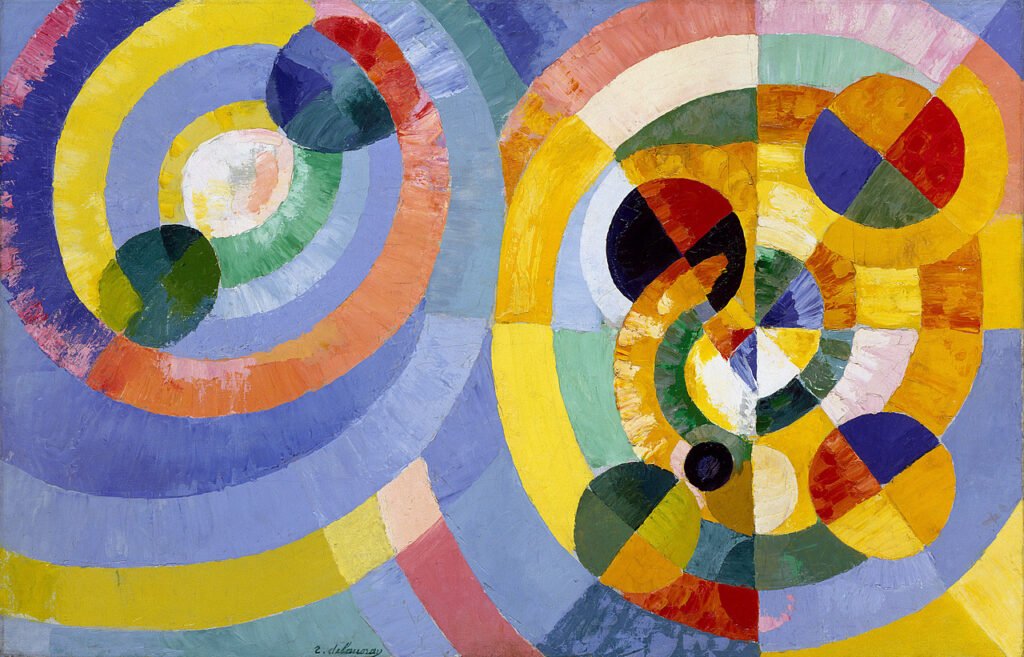
Unlike Expressionism, Orphism did not seek dramatic emotion but instead evoked lightness and energy. Its concentric circles, spiral fragmentations, and translucent overlays anticipated, in many ways, digital aesthetics and the psychedelic effects that would follow decades later.
Orphism in Contemporary Art and Today’s Design
Although it lasted only a few years — between 1912 and 1916 — Orphism had a profound impact. In the second half of the 20th century, abstract artists like Bridget Riley and Victor Vasarely revisited visual perception and color vibration, reinforcing Orphism’s influence. Today, you can see its legacy in advertising campaigns, album covers, animations, and in modern art produced by young artists who reinterpret the past through a contemporary lens.

The study Chromatic Abstraction and Digital Aesthetics, from the School of the Art Institute of Chicago, published in 2021, reveals that Orphism’s emotional use of color is increasingly present in interface design, immersive art experiences, and artistic NFTs. Art based on pure color has become a powerful way to stand out in today’s image-saturated world.
That helps explain the growing demand for vibrant pieces when people buy art — both for private collections and interior decoration. Buyers seek more than visually pleasing paintings: they want emotional resonance. In this sense, buying modern art inspired by Orphism is an excellent aesthetic and symbolic choice.
Fortunately, it is easier than ever to buy art online. Expert curation makes this possible. It ensures the originality of the art. It also gives access to emerging creators. These creators engage with movements like Orphism. Are you looking for the best place to buy art? Online platforms are often the best bet. They must champion artistic heritage and innovation.
After all, an Orphist work doesn’t just decorate a space — it breathes. It carries a unique belief. It believes that color can be melody. So, it believes that form can dance. Looking at a painting can be immersive. It can be like listening to a symphony.