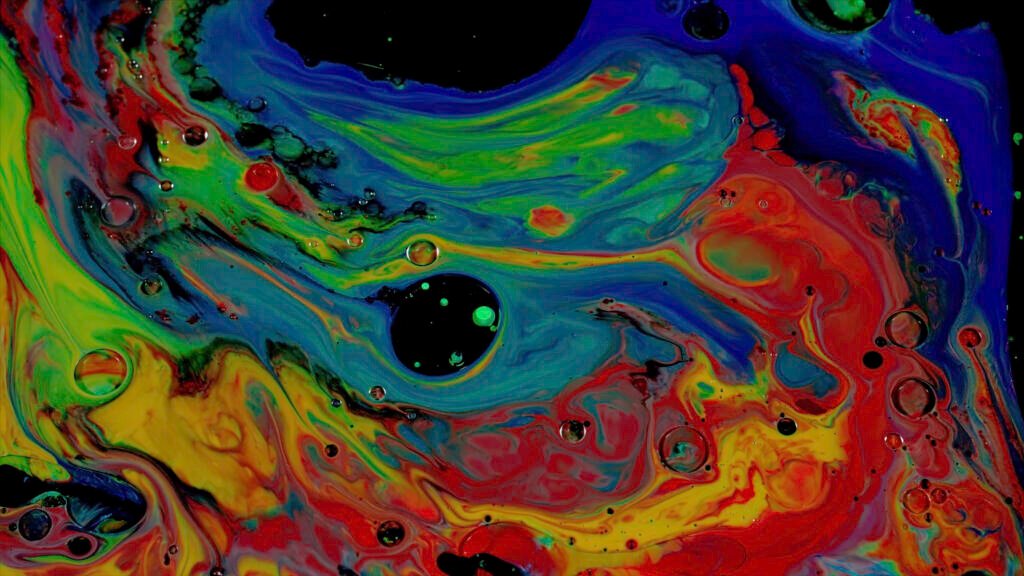
In the 1960s, the world witnessed a cultural explosion marked by social, political, and visual transformations. Psychedelic art, deeply connected to the countercultural spirit of the time, was one of the most powerful visual expressions of this revolution. With vibrant colors, hypnotic patterns, and a perception-distorting aesthetic, this visual psychedelia invaded concert posters, album covers, and art galleries.
Today, in the era of digital media, visual psychedelia is not only influencing contemporary design once again but also redefining visual communication strategies and interactive experiences. The recurrence of intense chromatic effects and fluid forms proves that this movement is not just nostalgic but also functional and innovative.
The Impact of Psychedelic Art in the 20th Century and its Presence Today
Inspired by altered states of consciousness and Eastern philosophies, psychedelic art emerged in the 1960s as a bold contrast to minimalism and modernism. While other movements focused on reduction, psychedelia expanded perceptual boundaries.
According to the study Art, Perception, and Consciousness, from Stanford University, published in 2008, psychedelic visual patterns activate brain areas related to memory and emotion, increasing the viewer’s engagement with the artwork.
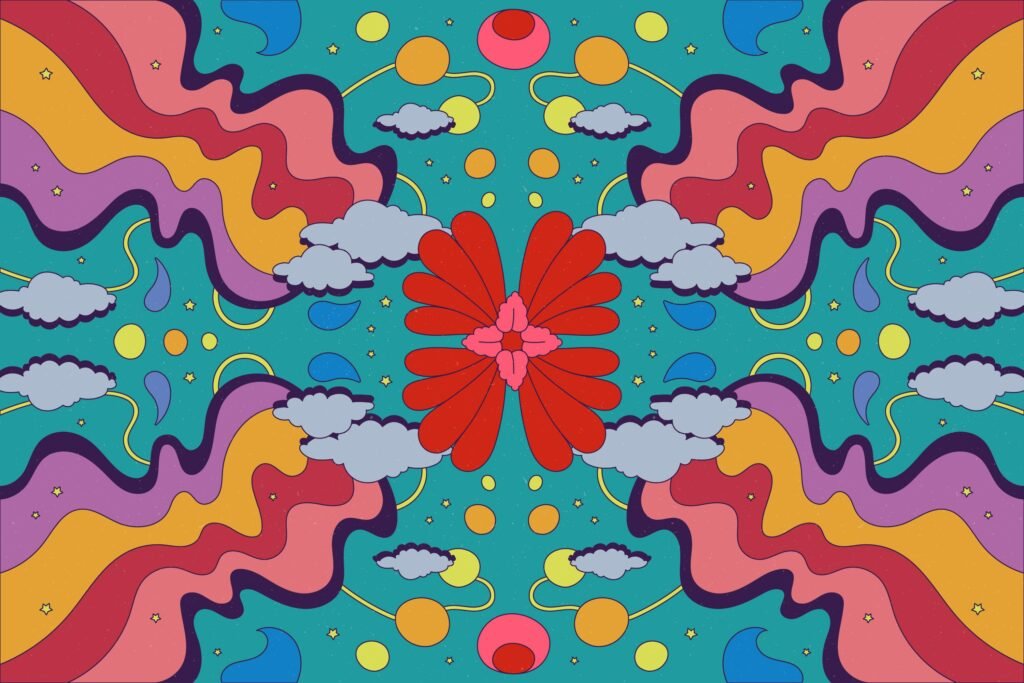
This sensory power continues to influence both artists and brands. Graphic designers, content creators, and animation studios are revisiting psychedelic visuals to create immersive atmospheres, especially in digital media. Platforms like Instagram and TikTok, with their chromatic filters and visual manipulations, have become new stages for this expanded language.
In addition, immersive exhibitions such as those promoted by the Japanese collective TeamLab use digital technologies to generate experiences reminiscent of psychedelic aesthetics. The fusion of digital art and psychedelia has sparked new interest in buying art and updating spaces with bold visual statements.
Psychedelic Aesthetics in the Art Market and Current Design
With the increasing demand for impactful visual stimuli, psychedelic aesthetics have gained ground in graphic design, fashion, and interior decoration. Psychedelia-inspired artworks are highly sought after by those looking to transform spaces with engaging and energetic visuals. Buying art pieces with this language has become a trend among collectors and digital-retro enthusiasts.
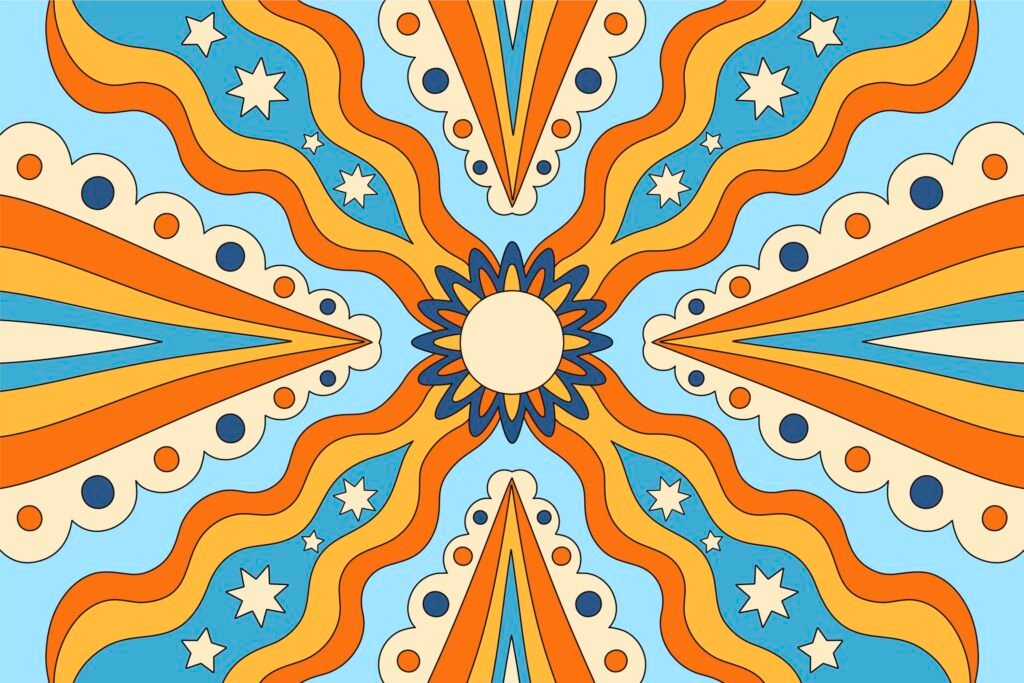
Moreover, e-commerce and specialized art marketplaces have made access to this kind of art more accessible. Today, buying art online allows anyone to find unique pieces with psychedelic features, created by contemporary artists combining analog and digital techniques. The best place to buy art is no longer limited to physical galleries but has expanded to platforms where visual psychedelia finds new forms and greater reach.
This style’s influence is also seen in advertising and branding. Brands like Apple and Adobe have explored psychedelic elements in campaigns targeting young and creative audiences. With its symbolic and emotional weight, this aesthetic proves effective in building bold and memorable messages.
Finally, visual psychedelia is more than just an aesthetic trend. It represents a language of resistance and expanded consciousness. In times of information overload, its return points to a collective search for more sensory and transformative visual experiences. That’s why it remains artistically and commercially relevant, inspiring new generations to experiment, feel, and buy art that resonates deeply with their emotions.