

Relational art emerged as an innovative movement that challenges traditional notions of artwork and spectator. Unlike classical forms of art, it prioritizes social interactions and shared experiences among participants. This type of art transcends the physical object and focuses on creating bonds, dialogues, and contexts that transform visiting an exhibition into a dynamic and participatory experience.
In recent years, relational art has gained strength and attention in the international art scene. This evolution reflects not only an aesthetic change but also a new way of thinking about art consumption and purchase. People increasingly seek immersive and meaningful experiences, and relational art offers precisely that by inviting the audience to be an active part of the creation.
How Relational Art Transforms the Visitor Experience
At the core of relational art is the idea that the artwork only exists in the relationships between the people participating in it. French artist Nicolas Bourriaud, who coined the term in his book Esthétique relationnelle (1998), highlights that the artwork manifests itself in the space of human relations, exchange, and coexistence. This approach deconstructs art as a static object and transforms it into a social event.
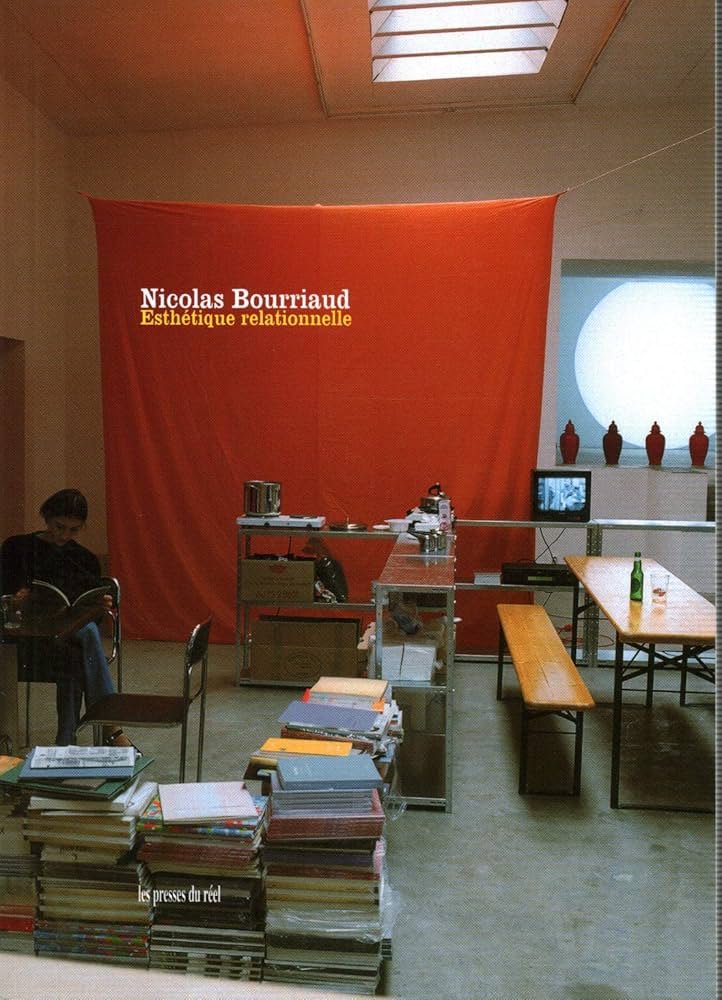
This concept directly impacts how the public visits exhibitions. Instead of remaining passive in front of a painting or sculpture, the visitor is invited to interact, dialogue, and even co-create. Projects such as those by Rirkrit Tiravanija, who serves meals in his installations to promote encounters and conversations, exemplify this logic. Relational art thus shifts the focus from the “object to be bought” to the “experience to be lived.”
However, this does not mean that buying art has lost its value. On the contrary, relational art broadens interest and engagement with the art field, encouraging a larger audience to discover and acquire works. Those who wish to buy art today can find in this trend a way to connect emotion, socialization, and investment.
The Relationship Between Relational Art and the Digital Market
With the growth of the online market, relational art also finds new ways to express itself and commercialize. Platforms that enable buying art online, for example, have been incorporating interactive and participatory experiences into their strategies. This can range from virtual events that connect artists and collectors to collaborative digital spaces.
A 2023 study from New York University supports this. Its title is Relational Art in the Digital Age. It says relational art converges with the digital world. This convergence enhances interactions. It also expands the audience’s reach. The research indicates this synergy favors art sales. It creates a more engaging environment for buyers.
The best place to buy art today is changing. It is not just where an artwork is offered. It is where a unique experience is provided. This experience can create lasting bonds. These bonds are between artist, artwork, and audience. This transformation is a significant market evolution. The market now values the relational context. It values this as much as the artistic object.